K-Classic News GS,Tak Chairman |
In today’s world, branding offers the fastest path to scalability. Every product must become a brand to gain customer preference, and through franchising, that brand builds a supply network. What is seen, heard, and repeatedly experienced becomes familiar—and ultimately consumed. This is the power of branding.
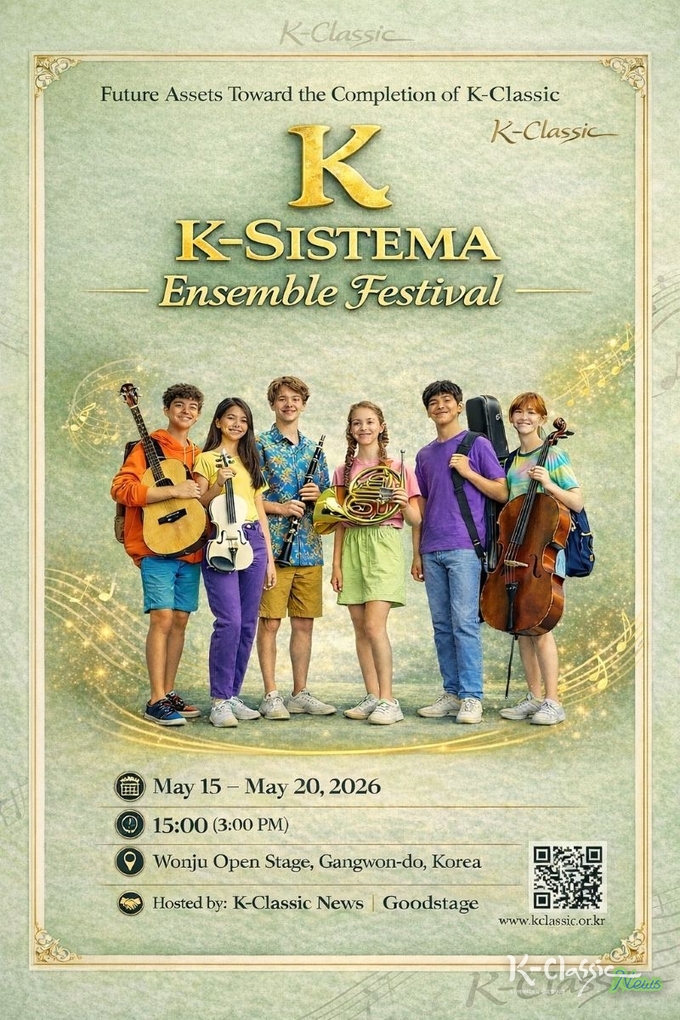
Korea has already become a global symbol through the single initial “K.” People around the world now aspire to visit Korea and experience something within it. In this context, K-Sistema holds the potential to evolve beyond a mere educational program into a new cultural brand.
The Era of K-Brand and the Next Stage of Expansion
K-Pop and Korean cultural content have already demonstrated powerful global brand influence. In particular, the global fandom phenomenon driven by BTS and related content has fueled both national image and tourism growth.
The next step is crucial. A new structure must emerge where music education, cultural experience, and tourism are integrated. K-Sistema can become a key pillar of this expansion. When music shifts from passive listening to active participation and experience, the brand gains far greater strength.
Youth Experiential Tourism as a Strategic Asset
Youth-centered experiential tourism is not merely consumption—it is the formation of future audiences. Cultural experiences during adolescence become lifelong memories and powerful motivations for return visits.
K-Sistema functions as a strategic platform in this regard. When young participants come to Korea to learn ensemble, perform, and experience cultural sites, it becomes more than education—it becomes a “cultural experience product.” Over time, these experiences translate into continued engagement and expand into global networks.
Expanding Family-Oriented Cultural Consumption
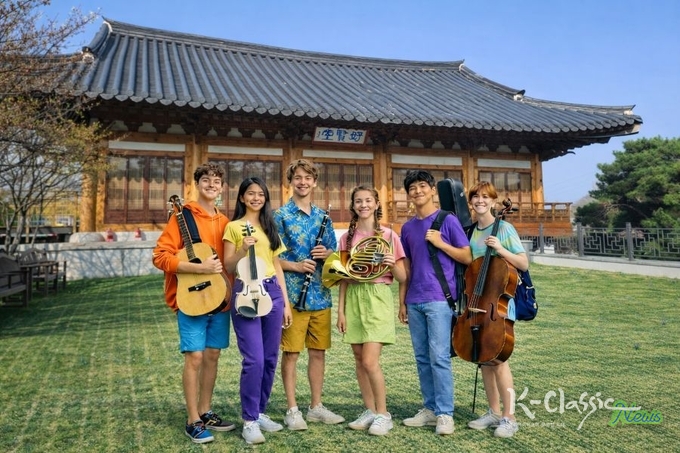
Although K-Sistema is designed for youth, it naturally involves conductors, composers, and parents, creating a multi-layered participation structure.
Parents who grew up listening to K-Pop are now inclined to visit Korea with their children, seeking deeper cultural experiences. Beyond music, they wish to encounter the beauty of Hangul, the essence of Korean tradition, and the depth of Korean musical identity. Performing works by Korean composers in traditional houses, temples, and historical sites transforms tourism into immersive cultural engagement.
Spatial Expansion Strategy of K-Classic Content
One of K-Sistema’s key strengths lies in the integration of space and content. Music activities conducted in traditional houses, temples, and natural environments—rather than conventional concert halls—reinforce the identity of K-Classic.
This approach goes beyond the Western classical “hall-centered” model. Here, space itself becomes content, and experience itself becomes performance. Such a model dissolves the boundaries between tourism and art, establishing a uniquely distinctive brand identity for K-Classic.
Building an Online Franchise Platform
The K-Classic Organizing Committee aims to build an online franchise platform that integrates education, tourism, and content. This goes beyond event planning—it is about constructing a sustainable distribution system.
If programs, content, and educational models are standardized and distributed globally through a franchise structure, K-Sistema can achieve long-term sustainability.
Through an integrated online platform—connecting reservations, education, and content consumption—accessibility and efficiency will be maximized, benefiting participants, organizers, and local communities alike.
From Brand to Ecosystem
K-Sistema must grow beyond a brand into a comprehensive ecosystem. When education, performance, tourism, content, and platforms are organically interconnected, true sustainability emerges.
This is not a short-term business model. It is the act of sowing seeds and waiting. Yet once those seeds take root, they form a forest. K-Sistema is now planting that very first seed.